
The 3-3-3, 7-8-9 and 5 P's time management rules, explained
What the 3-3-3 rule, the 7-8-9 rule and the 5 P's of time management mean, how to use each one at work, and how to tell if they are working.
 By Himanshu Verma, Head TechnologiesPublished 6 min read
What are the 3-3-3, 7-8-9 and 5 P's rules of time management?
The 3-3-3, 7-8-9 and 5 P's are simple rules of thumb for managing time. The 3-3-3 rule plans a working day. Spend 3 hours on your most important work. Then finish 3 shorter urgent tasks and 3 maintenance tasks. The idea is often credited to the writer Oliver Burkeman. The 7-8-9 rule balances a whole day. It means 7 hours of sleep, 8 hours of work and 9 hours for everything else. Versions vary, but the point is a clear boundary for work. The 5 P's stand for Proper Planning Prevents Poor Performance. A few minutes of planning saves hours of rework. Each rule is only useful if it changes the real day. A record of focused time and finish times shows whether it does. Try one rule for two weeks, then check the data before adding another.
Simple rules of thumb are popular in time management because they are easy to remember. Three come up again and again in searches: the 3-3-3 rule, the 7-8-9 rule and the 5 P's. Each answers a different question. Here is what they mean and how to use them at work.
| Rule | What it is | The question it answers |
|---|---|---|
| 3-3-3 | 3 hours of deep work, 3 short tasks, 3 maintenance tasks a day. | How should I plan a working day? |
| 7-8-9 | 7 hours of sleep, 8 hours of work, 9 hours for everything else. | How should I balance a whole day? |
| 5 P's | Proper Planning Prevents Poor Performance. | Why should I plan at all? |
What is the 3-3-3 rule for time management?
The 3-3-3 rule splits a working day into three parts. Spend 3 hours on your most important piece of work, ideally without interruptions. Then finish 3 shorter, urgent tasks, such as a review or a call. Then do 3 maintenance tasks, such as email, filing or planning tomorrow. The idea is often credited to the writer Oliver Burkeman.
The rule works because it is honest about limits. Few people manage more than a few hours of truly focused work a day. Protecting those 3 hours matters more than filling the other 5.
How to use it
- Pick tomorrow's one important task before you finish today.
- Block 3 hours for it in your calendar, at the time you focus best.
- List the 3 short tasks and 3 maintenance tasks, and stop there.
What is the 7-8-9 rule for time management?
The 7-8-9 rule divides the 24-hour day. Sleep for 7 hours, work for 8 hours, and keep 9 hours for everything else: travel, meals, family, exercise and rest. Versions vary, but the point is the same. Work should have a boundary, and rest is part of the plan, not what is left over.
The International Labour Organization has long treated limits on working hours and enough rest as basic to health and productivity. Long hours every day are a warning sign, not a badge of honour.
How to use it
- Set a clear finish time for the working day, and keep it most days.
- Notice when work regularly spills into the 9 hours meant for the rest of life.
- Treat a run of long days as a workload problem to fix, not a habit to admire.
What are the 5 P's of time management?
The 5 P's stand for Proper Planning Prevents Poor Performance. Some versions say Prior Preparation instead of Proper Planning. Either way, the message is that a few minutes of planning saves hours of rework later.
How to use it
- Plan the week on Monday morning or Friday afternoon, in fifteen minutes.
- Plan each day the evening before, around your one important task.
- Review on Friday: what took longer than planned, and why?
How to tell if a rule is working
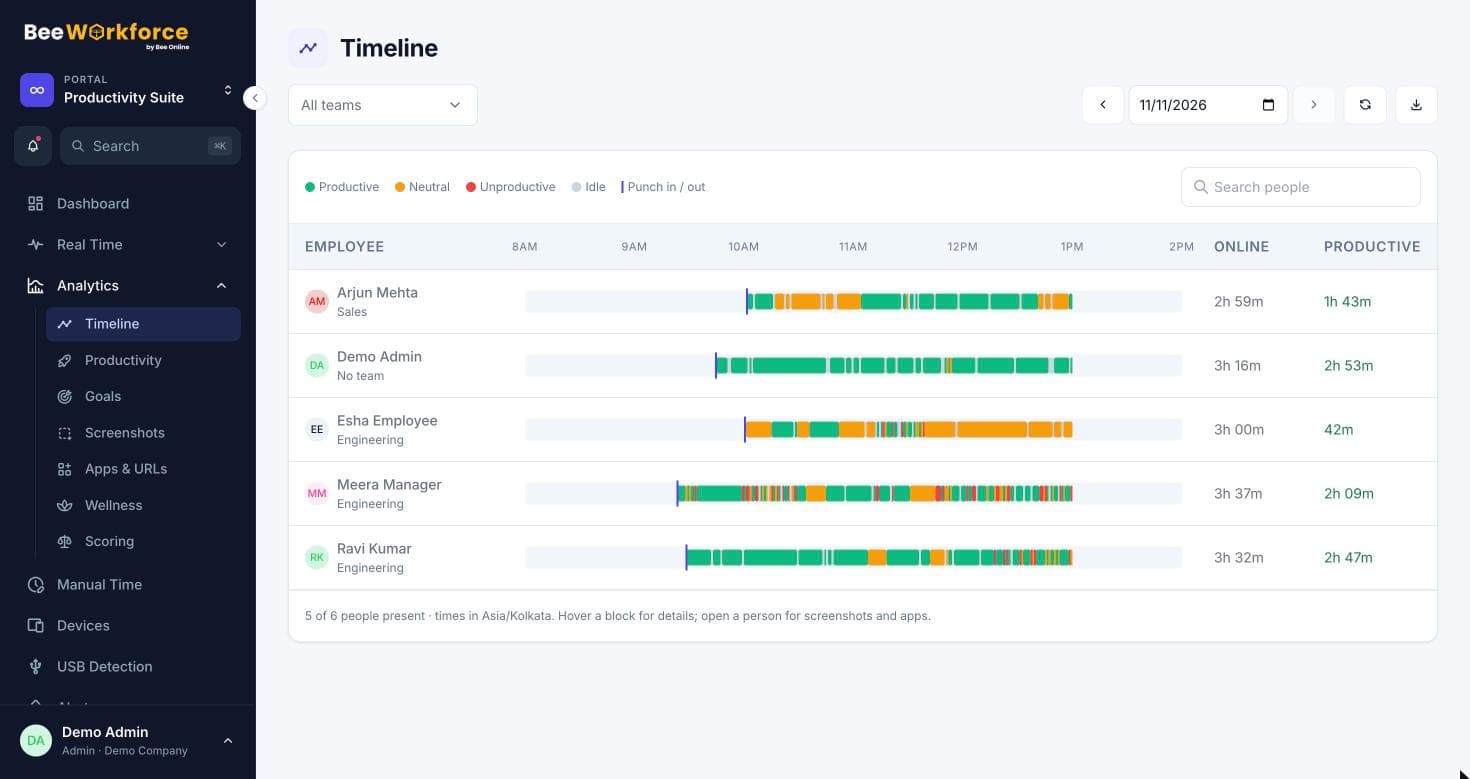
Rules of thumb are only useful if they change how the day actually goes. That is hard to judge from memory. A simple record of your day helps. Look at when you were focused, how often you switched tasks, and when the working day really ended. Over a few weeks, you will see whether your 3 focused hours happen, and whether work stays inside its 8 hours.
In BeeWorkforce, people can see their own timeline of productive, neutral, unproductive and idle time, and wellness views flag sustained long days. That makes it easy to check a time management habit against what really happened, and it gives managers an early signal when a team is working too long.
Sources: Time management (Wikipedia) · Working time and work organization (International Labour Organization)
Keep reading
What is office productivity software? The features that matter
What office productivity software is, the main types, which productivity features matter most for a team, and how productivity tracking tools fit in.
15 Nov 2026 · 6 min readBuilding productivity categories that fit each team
One company-wide list of productive apps rarely fits everyone. How to build categories and per-team rules so productivity numbers reflect real work.
29 Sept 2026 · 5 min read
Active time vs productive time: what the numbers really mean
Online, active, idle and productive time measure different things. Here's how to read each one, where they mislead, and how to use them together.
12 Aug 2026 · 6 min readSee BeeWorkforce with your own team
Book a 30-minute walkthrough. We'll set it up around how your team works and answer your questions.